
Do Employees Really Want To Be Engaged? by Leigh Branham

26 Jul

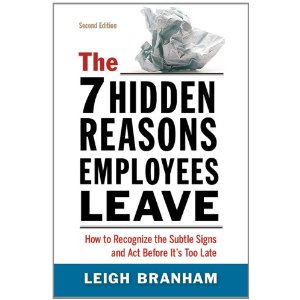
The following post was written by my good friend and co-author Leigh Branham. The second edition of his book The Seven Hidden Reasons Why Employees Leave, published by AMACOM, is due out next week. Check out his web site: www.keepingthepeople.com.

As I speak and listen to managers about employee engagement, I occasionally hear a manager come right out and say, “employees don’t want to be engaged.” I have concluded that for every manager who expresses that belief out loud, there are many more who believe it and don’t say it. I believe this mindset helps explain why only about 25% of the workforce is fully engaged. Managers (and senior leaders) who don’t believe employees want to be engaged are less likely to try to engage them and more likely to use a disengaging KITA (Kick-in-the-Ass) management style.

It is understandable that managers have this worldview. For centuries, most notably exemplified by the Greeks and Romans and continuing through the Puritan work ethic that is alive and well yet today, work has been seen as a necessary evil to be suffered and endured. It is only in the last 50 years or so that the idea of a job as a vehicle for self-fulfillment has been widely embraced.

And yes, of course, there are still significant numbers of employees for whom the idea of achieving personal fulfillment at work is a foreign concept. They view work as something they do simply to earn a paycheck that allows them to pursue the things they truly enjoy on their own time. Are they engaged? The term I’ve seen lately to describe these workers is “transactionally engaged.”

By contrast, the “emotionally engaged” are willing to give more discretionary effort at work because they feel a strong bond or connection with the organization, manager, coworkers, or the work itself that is often more important to them than pay.

The transactionally engaged, who most certainly comprise a large portion of the 75% that Gallup identifies as either “not engaged” or “actively disengaged”, aren’t emotionally connected to the organization to the point that they are willing to go above and beyond what’s minimally required on the job. When some managers say they don’t believe employees want to be engaged, they almost certainly have these employees in mind. Thus, we have a matching of mindsets and low mutual expectations.

The question that intrigues me is “what if we could demonstrate to the transactionally engaged that it is possible and desirable for them to be emotionally engaged, not just for the sake of their being more productive for the company’s benefit, but because it would also enhance their personal well-being?

We know what drives engagement. Gallup, Kenexa, Towers-Watson, Sirota and others have all come to very similar conclusions as Mark Hirschfeld and I did in our analysis of 2.1 million employee engagement surveys. Here are the six universal drivers we identified in our book Re-Engage (McGraw-Hill, 2010) that the best employers have in common:

1. Caring, competent, and communicative senior leaders,

2. Managers who proactively manage performance through clear expectations and feedback,

3. A culture of teamwork, not “we vs. they,”

4. Job enrichment, learning and growth opportunities,

5. Feeling valued monetarily and a dozen other ways, and

6. Feeling the organization and manager care about your personal well being.

When these drivers are present in an organization’s culture, employees feel “given to” and, as a result, they typically want to give back. Put another way, they become “emotionally engaged.” Organizations that score higher on these drivers have fewer transactionally engaged employees and more who say things like “For the first time in my life, I actually look forward to coming to work in the morning.” In other words, their eyes have been opened to the possibility/reality that work can be a source of personal fulfillment. Deep down, I believe, we all want to be engaged at work…if only we knew it was achievable.

This is why it is so important for employers not to “roll out” employee engagement “programs”, but instead, actually start doing all the things that truly engage employees. This means training managers in what really engages employees, giving managers the discussion tools they need to engage and re-engage their direct reports, and holding managers accountable for improving a few carefully selected metrics.

Too many companies are conducting engagement surveys without truly intending to take action based on the results. To be fair, some do intend to take action, but still don’t follow through. This only serves to further reduce employee expectations and raise levels of cynicism. For more on this, see C.V. Harquail’s provocative blog — “Why Employee Engagement is a Scam-.

Done well, and not as an exploitive way to get employees to give more effort without giving them something in return, employee engagement is most certainly not a scam. Authentic engagement initiatives inspire commitment, not cynicism.

TED Talk– Shawn Achor: The happy secret to better work

9 May

Remarkable twelve minutes on why happiness is so important:

Wellbeing Idea Management Case Study

8 May

The following video was provided by our colleague Dr. Jerry Wagner about the experience of One World Community Health Center and the wellbeing idea management process. For more information about the process and additional testimonials, go to www.catalystmanagement.wordpress.com.

Quieting the Naysayers

29 Apr

We all know naysayers, people with a less than positive attitude. The dictionary describes a naysayer as someone with “an aggressively negative attitude.”

Aggressively negative, yikes.

Okay, we all have probably been naysayers at one time in our work life. Things happen at work and we can get crabby, hopefully for just a while. However, I think we can all agree that too much naysaying, too many aggressively negative attitudes, can seriously damage the culture of a workplace.

How do we stop naysaying?

I had the opportunity to interview an executive whose organization participated in an Employees Know wellbeing idea management project, an effort designed to gain employee feedback about what could be done to improve individual and organizational wellbeing. She was very pleased with the process that brought forward employee ideas. This process included the creation of a “unity council” to manage the project and communicate with employees who forwarded wellbeing ideas. Most of the ideas had been implemented in a few short months, and was looking forward to conducting the process again the following year. I asked her if she saw any additional benefits to the process we had not discussed. Her answer was a pleasant surprise: “Mark, our culture is different. In particular, the naysaying that we used to have is gone.”

The naysaying is gone???

She told me that previous to this process there were several individuals who always seemed to be negative about, well, anything and everything. Moreover, they were quite vocal, and like a bad virus would spread their negative attitudes to others. As the wellbeing idea management process unfolded, something seemed to happen in the organization, something quite unexpected. When employees (whether naysayer or not) saw that employee ideas were being taken seriously and then implemented within a short period of time, the naysayers seemed to lose their footing.  The naysaying went away. “Our work environment is now much more positive, and not just about wellbeing but about other things. Just going through the process has contributed to our wellbeing”, she said.

In our consulting work, we’ve seen three different groups vie for control of this part of the culture, the part that allows, or at least tolerates, negative attitudes. They are:

  • “Hard-Core-Naysayers”,
  • “Swing-Vote-Naysayers”, and
  • “People-Who-Put-Up-With-Naysayers”.

Here’s what I think happened to these groups as a result of the wellbeing idea management process:

  • The “Swing-Vote-Naysayers”, who didn’t like to gripe but felt like they had some legitimate complaints, stopped griping because, well, they no longer had a reason to gripe. They were glad that leadership stepped up and responded. As long as leadership continues to be open to processes such as this, they’ll be just fine.
  • The “People-Who-Put-Up-With-Naysayers” were as pleased as they could be, because they had ammunition to tell the hard-core naysayers to stop it. This made them smile. Some of them are smiling because they can stop looking for a new job because they were sick of the negativity.
  • The “Hard-Core-Naysayers” stopped because they lost their audience. It’s hard to naysay when lots of positive things are happening around and to you that came largely from feedback from your peers. Some may be looking for another place to naysay—we’ll miss them but wish them well.

Idea management killed naysaying at this organization! In truth, what killed the naysaying was a manager who encouraged employee feedback, was able to truly hear what employees were concerned about, and acted in way that helped employees know they were heard. We call that leadership.

Disability Doesn’t Mean Inability– Ethan

28 Apr

I saw this video today on Mashable. According to them, this young man, who is six, is on the autism spectrum. In spite of (because of) his disability, Ethan is a remarkable pianist. Yet another example of what I’ve been saying for years– disability doesn’t mean inability. In Ethan’s case, his talent is quite obvious, where for other folks with disabilities their gifts, and talents may be more subtle.

But they have them. As you enjoy Ethan’s gift, think about what you can do to identify and nurture the talents of someone like Ethan.

Nobody Goes It Alone– The Case for Wellbeing at Work

27 Apr

If you want to be happy, set a goal that commands your thoughts, liberates your energy, and inspires your hopes.

~ Andrew Carnegie

What is wellbeing? One definition says wellbeing is the “state of being happy, healthy or prosperous”. All of us would like to be happier, healthier or more prosperous, right? In our work we’ve seen employees at all kinds of organizations work together to improve wellbeing—this can truly happen.

Improving our wellbeing is more important now than ever before. As “advanced” as we have become in things like information technology or medical science, the truth is that wellbeing for many of us is headed in the wrong direction:

  • As a nation, we are more obese than ever before, which is a leading cause of heart attacks, strokes and diabetes.
  • The rate of how much we save has gone down, and more of us face financial challenges such as bankruptcy or losing our homes than ever before.
  • The percent of employees who dislike their jobs, who are “disengaged”, is disturbingly high.
  • In spite of all the ways we can be connected, many of us feel more alone, in some ways more isolated, than ever before.
  • Happiness in the United States, as measured by surveys, has not increased in decades.

We can do better. We have to do better. Addressing these problems by increasing our wellbeing may be the most important challenge of our time.

How do we do that–how do we increase our wellbeing?

Together.

We think our wellbeing matters. We believe we can work together to improve wellbeing, and the workplace is an excellent place for this to happen.

You might be asking yourself—isn’t “our wellbeing” a contradiction in terms? Isn’t wellbeing something I have to do for myself? Isn’t that my responsibility, not my employer’s?

To be sure, wellbeing is about what each of us decides to do. No one is holding a gun to our heads as we chow down on a greasy, cholesterol-laden bacon cheeseburger. No one is forcing us to sit on the couch watching yet another rerun of our favorite sit-com instead of exercising. No one is telling us to spend money on an item we can’t really afford and probably don’t need. And though some of us may feel “locked” into a job (even one we hate and is not a good use of our unique talents) career changes are possible.

Those are choices we make.

But you might be surprised at how much our wellbeing is impacted by those around us—our family, people we meet in school, people we associate with in community groups, and folks with whom we work:

  • When we tell someone about a personal goal we have set for ourselves, the chances we will achieve that goal increase dramatically.
  • Our friends, at work and elsewhere, can have a profound impact on our health, such as if we smoke or are overweight.
  • If a coworker we are close to is unhappy and talks to us about leaving her/his job, we are more likely to leave our job.
  • Seniors who have weak social ties are more likely to die than those who have strong relationships and social networks.
  • Most of us will find a new job by leveraging our current network of friends and their contacts.

As the musician Bruce Springsteen sings, “nobody goes it alone”.

Every now and then we have one of those rare moments when everybody can win if we all work together toward a common goal, when, as they say, all boats rise with the tide. In the case of increasing wellbeing in our places of employment, working together, deciding to not “go it alone”, can be a “win-win”. If each of us increases our wellbeing, we’ll likely experience more happiness and health and joy. And we’ll also likely be far more engaged and productive at work, so our employer will be happy—everybody wins!

We know of numerous examples of where improving wellbeing in the workplace has specific, measurable returns. It’s already clear that investing in wellbeing activities can reduce health care costs and improve employee engagement and retention.

Let’s work on wellbeing– together.

Alberto Cairo– Helping the Disabled Find Dignity

15 Feb

So very much worth a few minutes of your time to watch this TED video. Alberto is helping people find meaning and dignity in their life. Inspiring.

Shameless Promotional Plug for “Social Gravity”

6 Feb

I’m pleased to share the good news about Social Gravity, the newly released book by Joe Gerstandt and Jason Lauritsen.

These guys are smart. They are articulate. And, importantly, they are passionate about anything they focus their gray matter towards. To our benefit their first (and certainly not last) book explores the importance of establishing, developing and nurturing relationships, creating what they call “social gravity”.

Mother Nature did her snow thing and left me home bound this weekend, and reading Social Gravity was just the ticket for the winter doldrums. Social Gravity is 150 packed pages of good stuff about what social capital is and how you can become more inter-personally effective. At the end of most chapters they give you some questions to ponder, which were helpful in validating that, in some cases I’m doing pretty well but in other situations I need to do better in my gravity efforts.

What I like most about this book is what is isn’t– a “how-do” manual that gives glib, trite tactics to manipulate others to fall in love with you. They challenge you to do this important work with authenticity. What they are asking us to do is much more difficult and requires more thinking  and elbow grease on our part, but will pay far more dividends in initiating and nurturing authentic relationships.

So buy the book, and also check out the always interesting, provocative ongoing conversation at www.talentanarchy.com.

P.S. Part of the social gravity case is built on research Jason and Joe conducted in collaboration with my pals at www.quantumworkplace.com— kudos to them for supporting this effort.

Kiss My Kettlebells: Examining Corporate (And Our Own) Wellness, Part Two

6 Nov

As I mentioned in my last post, I had the great pleasure of facilitating a discussion at the second annual HR Reinvention Experiment. My talk was entitled “Kiss My Kettlebells: Examining Corporate Wellness”.

As I mentioned in my first post about the workshop, we spent time talking about our own journey in wellness. I am convinced we can more effectively assist others in their wellness journey if we are actively involved in our own.

In the second part of the workshop, we looked at the elements that make up successful wellness programs. For this section I cited information I heard earlier in their from Dr. William Baun, who heads the wellness effort at the MD Anderson Cancer Center. I had the pleasure of hearing him speak at the first annual Well Being Conference held in my hometown of Omaha. Bill and his colleagues authored a terrific article in the Harvard Business Review (this link will show you the first page or so of the article, but you will need a subscription to read the entire article, which I strongly encourage) that identified six elements that are common to some of the best corporate wellness programs in the country. They are:

  1. Multilevel Leadership, passionate leaders at all levels,
  2. Alignment, where wellness is a natural extension of the firm’s identify and aspirations,
  3. Scope, Relevance and Quality, where wellness meets the unique needs of various employees,
  4. Accessibility, so there is convenience to wellness resources,
  5. Partnerships, that are both internal and external to the organization, and
  6. Communications, that helps overcome apathy and can address sensitivities people may have about their wellness journey.
We had a terrific discussion about these elements, something I strongly encourage you to do where you work. Get a conversation going with key stakeholders to determine where you believe you have strength in these six elements, and where you may also have some gaps. Doing so will help you know where you’re at and what steps need to be taken to move your wellness effort forward.
One of our participants talked about how reviewing these elements helped her rethink her approach to wellness. “We’ve been doing some things here and there, but we don’t have a plan and a design of how this is going to help our company be a better place to work. It’s time to get that discussion going.” That kind of honesty and spirit will make a difference!

Kiss My Kettlebells: Examining Corporate (And Our Own) Wellness, Part One

1 Nov

I had the great pleasure of presenting “Kiss My Kettlebells: Examining Corporate Wellness” at the second annual HR Reinvention Experiment, held last week at the Hot Shops Art Center in Omaha, Nebraska.

What a great discussion!

To give you a sense of our conversation, I first asked participants to explore their own wellness journey, a conversation that isn’t always made and frequently no easy. But I would contend that we will only be able to influence others in wellness if they believe we are active wellness participants– we simply need to be on that journey. If not, we risk looking like hypocrites.

For this exercise I asked them to think about where they were in seven key wellness categories. These seven categories were identified by Dr. Jerry Wagner, who was kind enough to offer them as a resource. You can find out more about them at his web site called Employee Wellness Collaborative.

I appreciated the honesty of the participants regarding where they were on the journey. One person talked about how they were working to improve their financial wellness, an often overlooked but increasingly important wellness category. Our more challenging economic times have certainly put more stress on employees regarding their financial wellness. It was encouraging to hear one participant talk about the financial education programs they have offered their employees, and how that has improved morale and productivity. It’s clear providing resources in areas such as financial wellness will be more important for more employers.

Another participant talked about her challenges regarding career wellness. She has recently completed additional higher education, and is hoping to grow in her current employer. As she was sharing tears welled in her eyes as she discussed her goals and dreams. We have people working with us right now who are also feeling strong emotions about where they are on their wellness journey, and we will gain more productive, committed employees if we can help them achieve their wellness goals.

And what about yours truly? Several months ago I was given some sobering information about those annoying scores like cholesterol and blood pressure. They shook me up a bit, and by good fortune I was given the opportunity to participate in a corporate wellness program that featured these lovely little devices called kettlebells. Several months later I’m in far better shape, and am healthier than I’ve been in years. I told my wife she’s just going to have to figure out another way to get rid of me! In truth, I feel much better, and am glad I’ve gotten a little further along the wellness path.

How about you?